About Jaipur City | Rajasthan India
One of the first planned cities, Jaipur is magnificent, with rich history and impressive architectural treasures. drawing tourists from India as well as from elsewhere. One of the greatest Indian cultural monuments, the Rajput dynasty established it. Its location close to Rajasthan's desert means that the climate is harsh year-round, summer or winter.
Several UNESCO heritage sites are there as well. Speaking of cuisine, this city offers a wide range of options, each with its own distinctive aromas and palates, from sweet to spicy.
What is the special name of Jaipur?
The stunning Pink City of Rajasthan: One of the major tourist destinations in Jaipur is the complex of palaces and three hill forts that formerly served as the bastion of a ruling family. Jaipur, also referred to as the "Pink City" because of the unique color of the stone used within the walled city, offers a variety of unusual goods at its bazaars, including blue ceramics, tie-dye scarfs, leather shoes with embroidery, and wraps. Located in the center of the Thar desert, which has molded its history, culture, and building design, Western Rajasthan itself makes a suitable circle.
Historical background of Jaipur
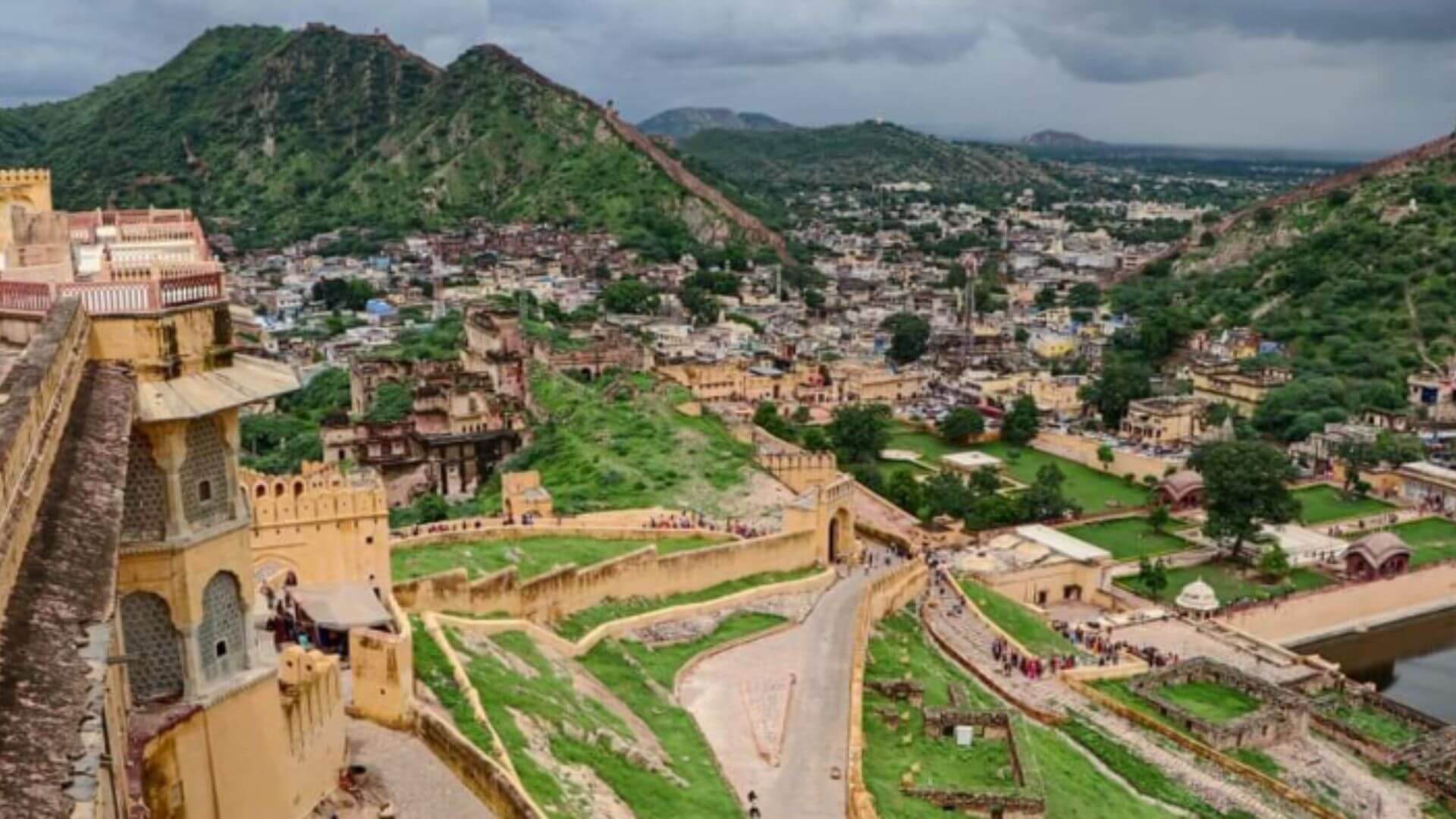
Maharaja Sawai Jai Singh II, a Kachawaha Rajput who reigned from 1699 to 1744, built Jaipur on November 18, 1727. His first capital, Amber, which is now spelt Amer, is located 11 kilometers away from Jaipur. After Aurangzeb's demise, Maharaja Sawai Jai Singh II decided that he should move his capital city for security concerns, as he expected Mughal King Bahadur Shah might invade it.
Growing water shortages and an ever-growing population forced him to establish a carefully designed city.
Spoken languages in Jaipur
In hotels and restaurants, staff members speak both Hindi and English, along with a minor amount of Rajasthani and Hindi. Even without much Hindi or English understanding, one may converse with ease.
Jaipur's architectural design
Jaipur's iconic architecture is its primary draw. The Indian science of Vastu Shastra, which encourages wealth and happiness, everyone there followed them for the planning of the city.
Every street and market in Jaipur runs from east to west and from north to south. Jai Singh II ensured that they followed theHindu aesthetic principle in the planning of the whole city of Jaipur. Built like an eight-part Mandala known as Pithapada. The city is full of stunning buildings that add to its attractiveness.
The world is familiar with its forts and monuments, including Hawa Mahal, City Palace, Jal Mahal, Rambagh Palace, Nahargarh Fort, Jaigarh Fort, and Amber Fort.
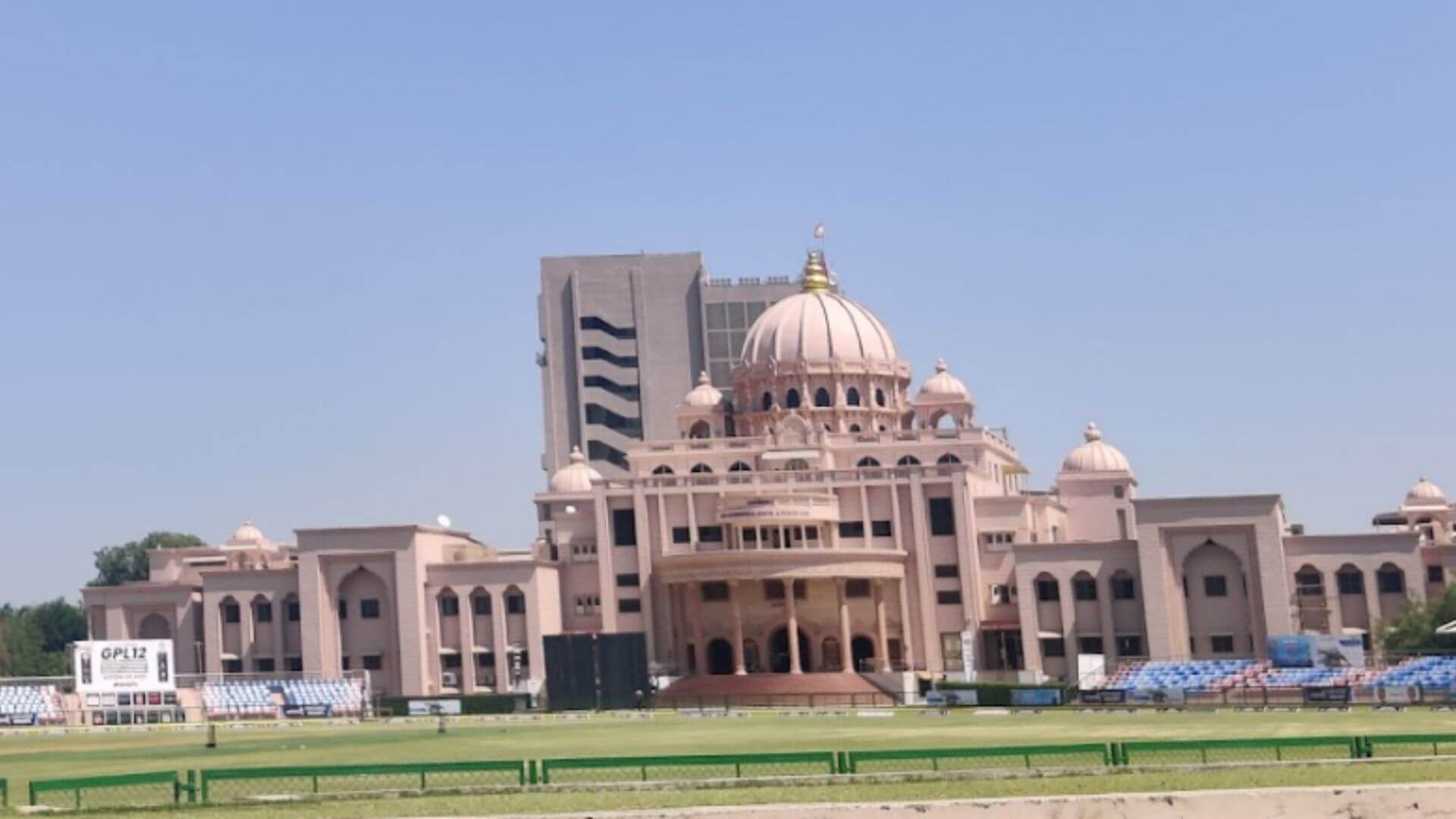
The pink City gets its name from the uncommon pink-painted sandstone used in the construction of its buildings.
Jai Singh II's heirs carried on the hard job of preparing and expanding the city while he was alive.
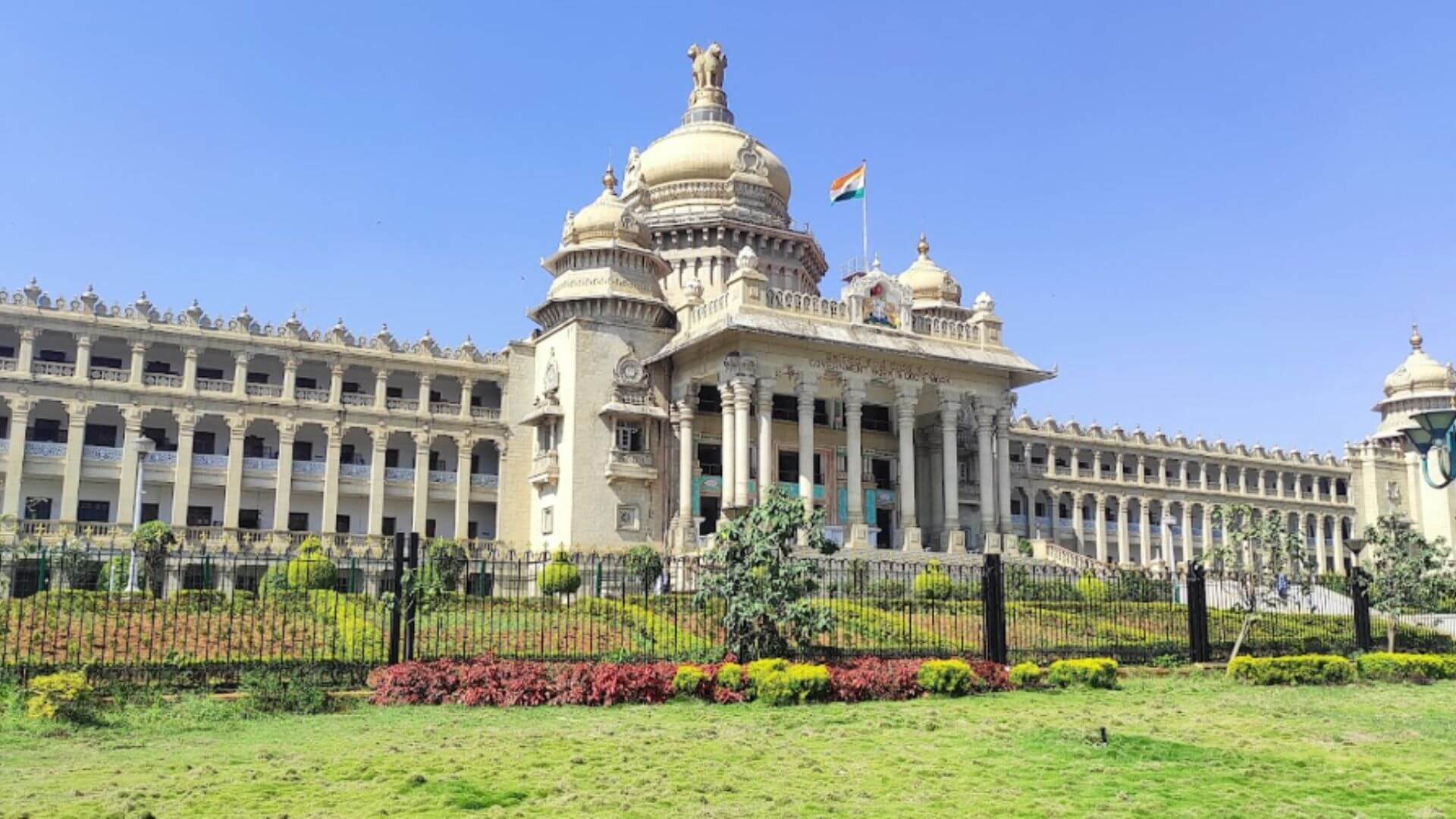
Buildings built during the British rule include the Vidhan Sabha, the Rajasthan School of Arts, and the Mubarak Mahal in the Palace Complex.
The Jaipur economy
Over time, Jaipur has experienced economic growth. The city's tourism industry has made a significant contribution in this regard. This area has seen the establishment of numerous large and small enterprises, and the number appears to be growing daily. Jaipur is a major Asian exporter of jewelry made of stones, gold, and diamonds.
Jaipur cuisine
Jaipur has some delicious food options. Popular food served here include the incredibly huge pyaaz kachori, Missi Roti, and Dal Bati Churma. If you enjoy sweets, you should definitely taste the mouthwatering Ghevar, Chaugani ke laddu, and Moong thal that are available here.
Celebrations in Jaipur
The Gangaur festival, Teej festival, Jaipur Literature festival, Chaksu Fair, Elephant Fair, and Shitla Mata Fair are just a few of the events and celebrations that Jaipur hosts.
The climate in Jaipur
The year-round temperature in Jaipur is consistently rather high. The summer months of April through July have an average temperature throughout the day of 30 C, while the winter months of November through February have an average everyday temperature between 15 and 18 C. Every year, almost 650 millimeters of drizzle is on it.
Jaipur's places to visit
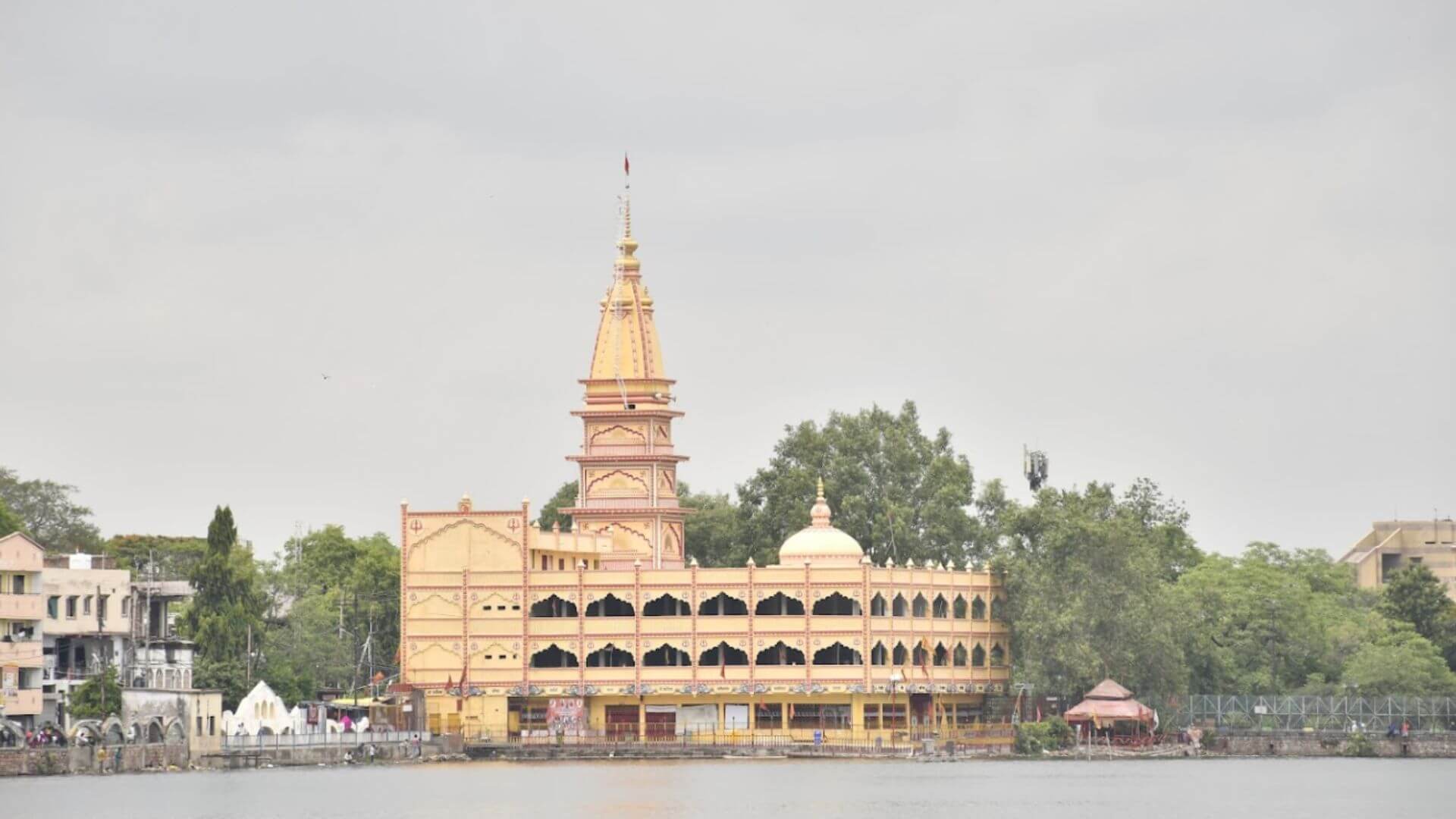
In addition to the structures covered in the Architecture section, Jaipur is home to a number of well-known shrines and landscaped areas that are well worth visiting. These comprises Kanak Ghati, Sisodia Ranj Garden and Palace, Govind Dev Ji Temple, Garh Ganesh Temple, Moti Dungri Ganesh Mandir, and Sri Sri Krishna Balram Temple.
There are also lots of different stores to choose from. These marketplaces are the ones in Johri, Baapu, Chaandpol, Kishanpol, and Tripolia.
Arts and Crafts
Beautiful l arts and crafts are another attribute of Jaipur's reputation. Numerous conventional stores in the city provide exquisite handicrafts and antiques for sale. Among the well-known crafts of the city are meenakari, tiny art, blue pottery, bangles, ivory carving, zari, gota-patti, bandhani, zardozi, gemstones, silver jewelry, kundan, block printing, sculpting, and artificial jewelry. Many artists, artisans, and craftsmen now call Jaipur home.
The mode of transportation to visit Jaipur
Jaipur Airport is 10 kilometers away from the city. Local flights serve Jaipur to Delhi, Mumbai, Kolkata, Ahmedabad, Jodhpur, and Udaipur.
The railroad system connects Jaipur Railway Station to a number of important cities, including Delhi, Agra, Udaipur, Jodhpur, Chennai, Mumbai, Ahmedabad, and Bikaner.
All of the main towns in North India, such as Delhi, Agra, Jodhpur, Bikaner, Udaipur, Ahmedabad, etc., are easily accessible to Jaipur via road.
Ibraheem Ali Opinion About Jaipur
Jaipur's rich legacy society, practices, events and celebrations, ancient civilization , and hundreds-year-old forts and buildings have earned it the moniker "Heritage City." The world is well aware of Jaipur, also known as the Pink City, for its magnificent buildings. Magnificent forts and monuments thoughtfully adorn the whole city.