Two-wheeler transport between cities in India is a practical and increasingly common service used by people relocating for work, education, or lifestyle change. The idea of riding a motorcycle or scooter across hundreds of kilometres to reach a new city is appealing in principle but impractical in reality for most intercity distances — the time, fatigue, and wear-and-tear on the vehicle make professional transport the more sensible option for moves beyond approximately 300 kilometres.
Bike transport services in India operate using a well-established process, but the quality of execution varies significantly between operators. This guide covers the full process from booking to delivery, what to do before handing over your two-wheeler, the specific checks required at delivery, and the common problems that arise during bike transport — and how to avoid each of them.
How Bike Transport Works in India
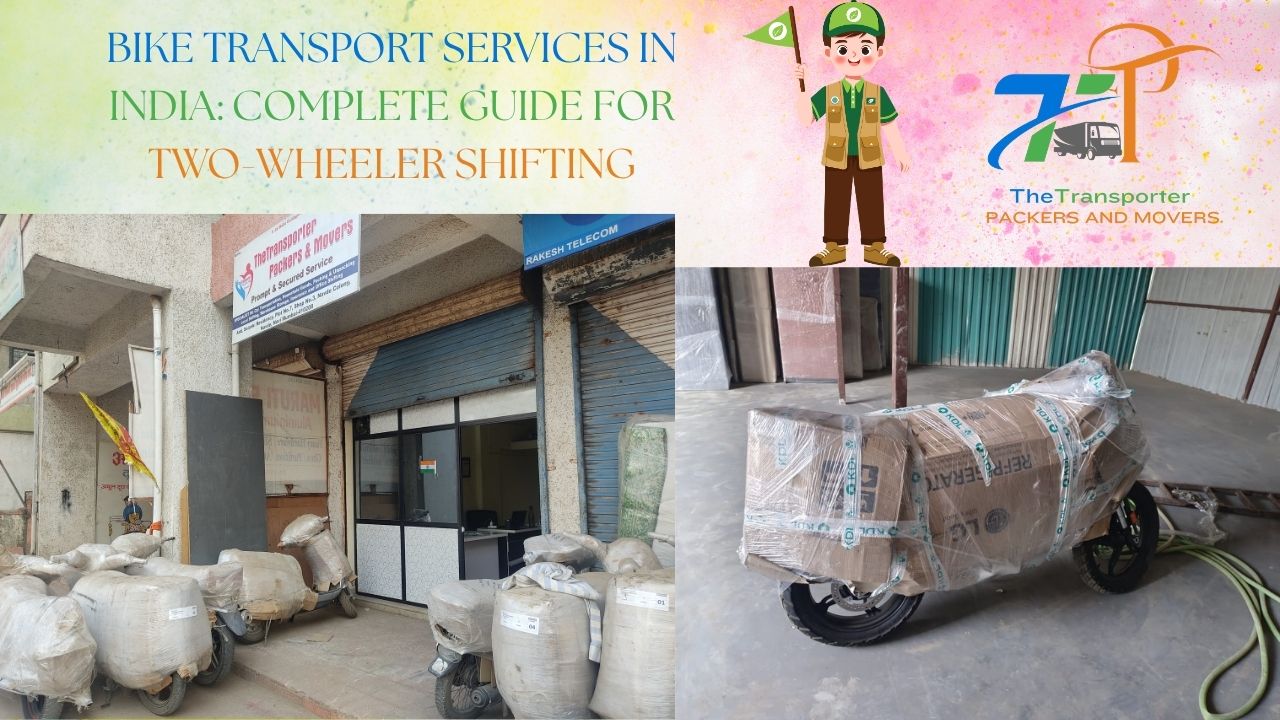
Professional bike transport in India uses one of two methods: shared carrier transport or dedicated parcel service. Shared carrier transport loads multiple two-wheelers together on an open or enclosed multi-vehicle carrier. Parcel service uses intercity courier networks — specifically DTDC, VRL, Safexpress, or similar logistics providers — and is typically cheaper but offers less visibility into transit status and handling quality. For high-value or newer motorcycles, dedicated carrier transport is the recommended choice.
- Shared carrier transport: Your bike travels on a multi-vehicle carrier alongside other two-wheelers or cars. Transit times are 3 to 7 days for most intercity routes. Suited to most motorcycle types and scooters.
- Parcel/logistics service: The bike is transported via the cargo network of a logistics company. Typically cheaper by 20 to 30 per cent but with less control over handling and transit route. Best suited to scooters and economy motorcycles rather than premium or custom bikes.
- Train transport (Parcel Van): Indian Railways allows two-wheelers to be booked as luggage on the Parcel Van attached to specific trains. This is one of the most affordable options for intercity bike transport but requires personal management of the booking, documentation, and pickup at the destination railway station.
How to Prepare Your Bike Before Handover
The preparation steps before handing your two-wheeler to a transport company are as important as selecting the right company. A well-prepared bike is easier to document, safer to transport, and faster to inspect at delivery. These steps take two to three hours and significantly reduce the risk of disputes arising from pre-existing damage or preparation-related issues during transit.
- Reduce fuel: Drain the fuel tank to approximately 500 ml to 1 litre — just enough to ride the bike on and off the carrier. A full tank adds unnecessary weight and poses a fire risk during enclosed transport. Most transport companies require this step and will refuse to load a full tank.
- Disconnect or remove the battery: For bikes not transported immediately, disconnect the battery terminal to prevent drain. For transport periods over 5 days, consider removing the battery entirely and carrying it separately.
- Document existing condition: Photograph every panel, the tank, the seat, the exhaust, the tyres, the mirrors, and the instrument cluster from all angles before handover. Time-stamp these photographs — they are your primary evidence in any damage dispute at delivery.
- Remove accessories: Remove any loose accessories — phone mounts, GPS units, decorative mirrors, rear boxes, and USB chargers — and carry them separately. These items are not covered by standard transit insurance and are easily lost or damaged during loading.
- Tie handlebar and lock the bike: Turn the handlebars to one side and engage the steering lock before handover. Inform the company representative of the lock position and provide a spare key if required for moving the bike within the carrier.
Documentation and Insurance
The documents required for bike transport in India are straightforward but must be in order before the company will accept the vehicle. Gaps in documentation at the handover point can delay the booking or result in additional charges at the destination if the vehicle cannot be registered or cleared correctly.
- Provide a photocopy of the vehicle Registration Certificate (RC) — the original travels with you, not with the bike.
- Provide a photocopy of your driving licence and a government-issued address proof.
- Confirm whether transit insurance is included in the quoted price or available as a paid add-on. For bikes valued above Rs. 1 lakh, transit insurance is strongly recommended regardless of the additional cost.
- Obtain a signed goods receipt from the transport company at the time of handover — this receipt must describe the bike by make, model, and registration number and must note the condition at handover.
What to Check at Delivery
The delivery inspection is the final and most important step in the bike transport process. All disputes about damage during transit must be raised at delivery — raising a damage complaint after signing a clear delivery receipt is treated as an admission that the bike arrived in acceptable condition, regardless of the actual situation.
- Inspect every panel, the tank, the seat, mirrors, and wheels against your pre-handover photographs before signing any delivery document.
- Start the engine and confirm the bike runs normally before the transport agent leaves the delivery point.
- Check that the odometer reading is consistent with the pre-handover reading — it should reflect only a few additional kilometres from moving the bike within the carrier yard.
- If any new damage is found, note it specifically on the delivery receipt before signing and photograph it immediately. Ask the delivery agent to countersign your note of the damage.
- Report any insurance claim within 24 to 48 hours of delivery — the reporting window under most transit insurance policies is short, and a delayed report is grounds for claim rejection.